. Military-Civilian: Hot Jobs, Events, and Helpful Information for Veterans Seeking Civilian Careers

Friday, November 22, 2019

Practical Nursing Specialist (68C)

Practical Nursing Specialist (68C)
Enlisted, Active Duty, Army Reserve, National Guard, Entry Level
Overview
The practical nursing specialist supervises or performs preventive, therapeutic, and emergency nursing care procedures under the supervision of a physician, nurse or NCO.
Job Duties
•Perform emergency nursing care
•Assist in patient care
•Change/dress wounds
Training
Job training for a practical nursing specialist requires 10 weeks of Basic Combat Training and 52 weeks of Advanced Individual Training at Fort Sam Houston, TX.
Skills you’ll learn:
•Patient care
•Working on a medical team
•Emergency care
Helpful Skills
•Willingness to help and care for others
•Ability to communicate effectively and work under stressful conditions
•Interest in chemistry, biology, general science and algebra
•Attention to detail
Future Civilian Careers
The skills you learn will help prepare you for a career in hospitals, clinics, nursing homes or rehabilitation centers. With a practical nursing specialist background, you may consider a career as a registered nurse, a medical assistant or a physician’s aide.

Related Jobs

Combat Medic Specialist (68W)
The combat medic specialist is primarily responsible for providing emergency medical treatment at point of wounding on the battlefield, limited primary care, and health protection and evacuation from a point of injury or illness.
Active/Reserve: Both
Officer/Enlisted: Enlisted
Restrictions: None

Operating Room Specialist (68D)
The operating room specialist assists the nursing staff in preparing the patient and the operating room environment for surgery and for providing assistance to the medical staff during surgical procedures.
They also operate the centralized material service and are responsible for preparing and maintaining sterile medical supplies and special equipment for medical treatment facilities.
Active/Reserve: Both
Officer/Enlisted: Enlisted
Soldier filling a prescription bottle. 

Preventive Medicine Specialist (68S)
Preventive medicine specialists are primarily responsible for conducting or assisting with preventive medicine inspections, surveys and preventative medicine laboratory procedures. They also supervise preventive medicine facilities or serve on preventive medicine staffs.
Active/Reserve: Both
Officer/Enlisted: Enlisted

Radiology Specialist (68P)
The radiology specialist is primarily responsible for operating X-ray and related equipment used in diagnosing and treating injuries and diseases.
Active/Reserve: Both
Officer/Enlisted: Enlisted

For more information click this link

Track Vehicle Repairer (91H)

Track Vehicle Repairer (91H)
Enlisted, Active Duty, Army reserve, National Guard, Entry Level
Overview
The track vehicle repairer is primarily responsible for performing maintenance on tracked vehicles and supervising activities that include fuel and electrical system repair and maintenance.
Job Duties
•Repair diesel power plants/packs, compression ignition engine fuel systems and compression ignition air induction systems
•Fix vehicle air cooling systems and vehicle liquid cooling systems, and track hull electrical systems and automatic transmission assemblies
•Service track vehicle cross drive transmission assemblies, transfer assemblies, hydraulic brake systems and fire extinguisher/suppression systems
Requirements
Those who want to serve must first take the Armed Services Vocational Aptitude Battery, a series of tests that helps you better understand your strengths and identify which Army jobs are best for you.
Training
Job training for a track vehicle repairer requires 10 weeks of Basic Combat Training and 13 weeks of Advanced Individual Training with on-the-job instructions. Part of this time is spent in the classroom and part in the field.
 Some of the skills you’ll learn are:
•Engine repair and tune up or replacement
•Troubleshoot mechanical and electrical problems
•Body repair and body panel replacement
Helpful Skills
•Interest in auto mechanics and the industrial arts
•Enjoy physical work
•Troubleshooting and repairing mechanical problems
Future Civilian Careers
The skills you learn will help prepare you for a career with auto and construction equipment dealers and farm equipment companies. You’ll be able to pursue a career such as a garage mechanic, carburetor mechanic, transmission mechanic, radiator mechanic or construction equipment mechanic.

Related Jobs
Soldiers working on equipment. 
Construction Equipment Repairer (91L)
Construction equipment repairers are responsible for maintaining trucks, bulldozers, power shovels and other heavy equipment that are needed for construction operations.
Active/Reserve: Both
Officer/Enlisted: Enlisted
Army M1A1 Abrams Tank
M1 ABRAMS Tank System Maintainer (91A)
The M-1 Abrams tank system maintainer is primarily responsible for supervising and performing maintenance on Abrams tanks.
Active/Reserve: Both
Officer/Enlisted: Enlisted
Bradley Fighting Vehicle System Maintainer (91M)
The Bradley fighting vehicle system maintainer handles the maintenance and repair of the M2/M3, A2/A3 Bradley fighting vehicle, the M6 Bradley linebacker air defense vehicle and the M-7 Bradley fire support team vehicle.
Active/Reserve: Both
Officer/Enlisted: Enlisted
Wheeled Vehicle Mechanic (91B)
The wheeled vehicle mechanic is primarily responsible for supervising and performing maintenance and recovery operations on wheeled vehicles and associated items, as well as heavy-wheeled vehicles and select armored vehicles.
Active/Reserve: Both
Officer/Enlisted: Enlisted

For more information click this link

Army M1A1 Abrams Tank

Wheeled Vehicle Mechanic (91B)

Wheeled Vehicle Mechanic (91B)
Enlisted, Active Duty, Army reserve, National Guard Entry Level
Overview
The wheeled vehicle mechanic is primarily responsible for supervising and performing maintenance and recovery operations on wheeled vehicles and associated items, as well as heavy-wheeled vehicles and select armored vehicles.
Job Duties
•Maintain wheeled vehicles, their associated trailers and material handling equipment systems
•Inspecting, servicing, maintaining, repairing, replacement, adjusting and testing of wheeled vehicles and material handling equipment systems, subsystems and components
•Service automotive electrical systems including wiring harness, and starting and charging systems
•Perform wheeled vehicle recovery operations
Requirements
Those who want to serve must first take the Armed Services Vocational Aptitude Battery, a series of tests that helps you better understand your strengths and identify which Army jobs are best for you.
Training
Job training for a wheeled vehicle mechanic requires 10 weeks of Basic Combat Training and 13 weeks of Advanced Individual Training with on-the-job instructions. Part of this time is spent in the classroom and part in the field.
Helpful Skills
•Interest in auto mechanics and the industrial arts
•Enjoy physical work
•Troubleshooting and repairing mechanical problems
•Interest in automotive engines and how they work
Required ASVAB Score(s)
Mechanical Maintenance (MM): 92
OR
Mechanical Maintenance (MM): 87, General Technical (GT): 85
Future Civilian Careers
The skills you learn will help prepare you for a career with service stations, auto dealers, farm equipment companies and state highway agencies. You’ll be able to pursue a career as a garage mechanic, carburetor mechanic, transmission mechanic, radiator mechanic, construction equipment mechanic or endless track vehicle mechanic.

Track Vehicle Repairer (91H)
The track vehicle repairer is primarily responsible for performing maintenance on tracked vehicles and supervising activities that include fuel and electrical system repair and maintenance.
  • Active/Reserve: Both
  • Officer/Enlisted: Enlisted
  • Restrictions: None
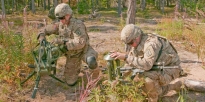
Soldiers assembling the Milan 2 Antitank System.

Land Combat Electronic Missile System Repairer (94A)

The land combat electronic missile system repairer supervises or performs field and sustainment level maintenance on a variety of systems, including the M-220 antitank missile system, Javelin systems and the Bradley fighting vehicle TOW subsystem.

  • Active/Reserve: Both
  • Officer/Enlisted: Enlisted
  • Restrictions: None

For more information click this link

Soldiers assembling the Milan 2 Antitank System.

Air Traffic Controll (ATC) Operator (15Q)

Air Traffic Controll (ATC) Operator (15Q)
Enlisted, Active Duty, Army Reserve, National Guard, Entry Level
Overview
The air traffic control operator is responsible for tracking planes and giving them landing and takeoff instructions at air traffic control facilities.
Job Duties
•Control airborne and ground traffic
•Assist in the installation/relocation of tactical air traffic control facilities
•Process flight plan data and maintain logs, records, files and tape recordings of voice communications
Requirements
Those who want to serve must first take the Armed Services Vocational Aptitude Battery, a series of tests that helps you better understand your strengths and identify which Army jobs are best for you.
Training
Job training for an air traffic control operator requires 10 weeks of Basic Combat Training and 15 weeks of Advanced Individual Training with on-the-job instruction. Part of this time is spent in the classroom and in the field under simulated combat conditions.
Some of the skills you’ll learn are:
•Air traffic control management and operational procedures
•Communications and radar procedures
•Aircraft recognition
•Takeoff, landing and ground control procedures
Helpful Skills
•Interest in work requiring accuracy and attention to detail
•Ability to remain calm in stressful situations
•Decisiveness and working within strict standards
•Ability to work as a team member

Related Jobs


Aviation Operations Specialist (15P)

The aviation operations specialist is primarily responsible for scheduling and dispatching tactical aircraft missions. They help operate one of the largest fleets of aircraft in the world and keep them running safe and efficient.

  • Active/Reserve: Both
  • Officer/Enlisted: Enlisted
  • Restrictions: None

For more information please go to this link

Soldier preparing a flight plan.

Wednesday, November 20, 2019

Member Services Officer (Teller) – Full Time

Member Services Officer (Teller) – Full Time: The Member Services Officer (Teller) will Performs basic teller transactions, such as but not limited to deposits, withdrawals, transfers, loan payments as stated in the Office Procedures Manual (OPM).

Member Services Officer (Teller) – Full Time

MSO 3 - Relationship Banker

MSO 3 - Relationship Banker: Under the general supervision of the Branch Manager, the Relationship Specialist Banker identifies the financial needs of Credit Union members & actively explains & promotes Credit Union deposit accounts, loans & services. Paso Robles, CA 93446

MSO 3 - Relationship Banker

IT Helpdesk/PC Spec 1

IT Helpdesk/PC Spec 1: Under general supervision of the Assistant Information Technology Manager, the IT Helpdesk/PC Specialist 1 is responsible for a variety of activities, including assisting with Helpdesk request problem resolution, personal computers, and technical/mechanic systems.

IT Helpdesk/PC Spec 1

Collections Fulfillment Officer

Collections Fulfillment Officer: The primary purpose of The Collections Fulfillment Officer is to assist the Credit Union to achieve its mission to make a difference in our neighbors’ lives.Vandenberg Village, 3880 Constellation Road, Lompoc, CA, 93436

Collections Fulfillment Officer

Part-Time Member Services Officer (Teller)

Part-Time Member Services Officer (Teller): Part-Time Member Services Officers will performs basic teller transactions, such as but not limited to deposits, withdrawals, transfers, loan payments as stated in the Office Procedures Manual (OPM).

Part-Time Member Services Officer (Teller)

Education Services Officer I

Education Services Officer I: Under general supervision of the Education Manager, an Education Services Officer is responsible for assisting in coordinating and directing employee education & development programs and providing financial literacy education to community.

Education Services Officer I

Data Scientist

Data Scientist: Under the direction of the SVP of Technology, the Data Scientist undertakes data collection, pre-processing and analysis. Vandenberg Village, 3880 Constellation Road, Lompoc, CA 93436

Data Scientist

Web Developer Hiring Event

Web Developer Hiring Event: Hundreds of Job Opportunities are available including Security Analyst, Systems Integrator, Network Engineer, Security Architect, Security/IT Director, Systems Administrator, Network Architect, Forensics Investigator, Auditor, Systems Engineer, Software Developer, Java Developer, Linguists, Software Engineer and many more.

Web Developer Hiring Event

System Administrator

System Administrator: In this position you will install, maintain, and upgrade Operation Systems and applications for Windows environments and manages file systems and configurations. Active current TS+. USSTRATCOM Offutt AFB, NE 68123

System Administrator

Cyber Security Policy Officer II

Cyber Security Policy Officer II: S4 Inc. is seeking highly skilled cybersecurity professional to support USCYBERCOM for Columbia MD 21046 with Current active TS+/Poly.

Cyber Security Policy Officer II

Information System Security Engineer II

Information System Security Engineer II: Seeking Information System Security Engineer II for Columbia, MD 21046 with Current active TS+/Poly DoD security clearance.

Information System Security Engineer II

Maintenance Fleet Specialist -

Maintenance Fleet Specialist -: The Maintenance fleet specialist is responsible to assist in all decisions involving CHS vehicles. Los Fresnos, TX 78566 US. Hiring veterans is a high priority at Caliburn.

Maintenance Fleet Specialist -

Monday, November 18, 2019

Opportunities Available for Medics and Corpsmen


Opportunities Available for Medics and Corpsmen: The Military Medics and Corpsmen (MMAC) Program from the Department of Veterans Services is holding an informational session on November 21 at the Fleet and Family Support Center in Portsmouth. Come learn how to turn your military experience into a civilian career.

Developing Smart Transition Goals


Published on September 27, 2019
By SFL-TAP HQ

“I want to get a job.”

“I’m planning on getting my degree.”


“I’m moving back to my hometown.”


These are all fairly common answers Soldiers give when they’re asked about their post-transition goals. They seem fine, and they all make sense, but they aren’t helping set the Soldier up for success. The Soldier needs to develop and define their goal to have the best chance of reaching it.

There are several components to making sure your goals are fully developed. An easy way to do it is make sure your goals are SMART - Specific, Measurable, Action-Oriented, Reachable, and Time-Driven.


First, you need to make sure your goal is 
specific. Instead of saying, “I want to get a job,” say “I want to get a job in the same field as my MOS, in the automotive industry.” It narrows down your search field and helps you focus. Then, make sure it’s measurable – what numbers are you using to measure your success? For a job search, it might be a salary range, or a date that you want to have an offer by.

Next, make sure it’s 
action-oriented. What will you do to achieve your goal? For our example, this could include submitting applications, networking, improving your resume, and practicing interview skills. It also has to be realistic – it isn’t very reasonable to say “I want to get a job offer tomorrow” or “I want to be making six figures by the time I’m 25.” Could these happen? Possibly. Are they very likely? Not really. Set your goals high, but make sure that they are attainable, or you’re just setting yourself up for disappointment.

Lastly, set a 
time-driven goal. Set timelines for yourself to stay motivated and driven. With all of these components, “I want to get a job” becomes “I will go to a networking event once a month and practice for interviews once a week. I want to receive an offer from a company in the automotive industry for a position related to my MOS within six months.”

While having your goal written out like that is important, it can also be a little overwhelming. To combat this, you can break your goal into smaller, short-term goals. These will outline steps you need to take, and help you appreciate the achievements you make on the way. This could sound like “I will go to a career fair next month to network with the automotive companies in attendance” or “I will attend a webinar in two weeks about interview skills, and I will write down three things that I learn from it that will help me practice.” These will help you keep moving forward toward your main goal.


This method can be used for professional, personal, financial, or any other type of goal you’re trying to reach. As you’re transitioning, looking for a job, planning your retirement, trying to start your own business, or whatever you’re aiming for, make sure that your goals are smart.

Saturday, November 16, 2019

Military-Civilian: 5 secrets to help you transition to a civilian job

 Military-Civilian: Hot Jobs, Events, and Helpful Information for Veterans Seeking Civilian Careers


Military-Civilian: 5 secrets to help you transition to a civilian job
U.S. Marine Major Nick Swaggert offers some advice to make your shift into the workforce easier.
You’re leaving the military and you’ve got your marching orders: Find a job in the civilian workforce.
Get ready for a tough mission. While the employment situation for vets has improved over recent years, it’s still harder out there for you than it is for your non-military peers. According to the Monster/Military.com Veteran’s Talent Index, post 9-11 veterans had an unemployment rate of 6.9% in April 2015 vs the non-veteran rate of 4.9%.
After years of being in a clear chain of command, a uniform and a closed culture with very specific working practices, the civilian working world comes as a culture shock to many vets, explains U.S. Marine Major Nick Swaggert, a veteran who assists other servicemen and women transition into the public workforce via the New York-based staffing firm Genesis10’s Veterans program. Creating a resume? Interviewing? Networking? Most veterans “really haven't been coached to do these things,” says Swaggert.
He offers you these tips to help you conduct a job search process that will result in a quick victory.
1. Get ready for battle
Many vets are surprised at how hard the job hunt is, Swaggert notes. And no wonder: In the military, the career path was clearly laid out for you. But in the civilian world, it’s up to you to take the initiative.
“Finding a job will be the hardest job you’ll ever have,” Swaggert says. “You have to realize how much you need to learn.” And, he says, you’re going to have to get used to facing rejection.
You’ll get through it easiest if you apply the kind of strategy-setting you learned in the military.  “You have to set short-term goals and long-term goals and hold yourself accountable to those,” Swaggert says. Start by organizing your educational and training documents: The Department of Veteran Affairs suggests you have copies of your Report of Separation and Verification of Military Experience and Training to verify your military service, training, and experience. It may also be helpful to provide transcripts of any military training and coursework you completed. In any case, these are useful to help build your resume.
2. Establish your battalion
Networking in the military world is considered taboo, since "it means going outside your chain of command—which is a huge no-no,” Swaggert says. As a result veterans don’t often know how to do it, or feel comfortable trying.
But Swaggert says veterans need to break from that mold if they want a successful job search. Just as in the military you needed the support of those in your unit or division to get things done, in the working world you need people to help you guide your search, push your resume into the right hands, and serve as references. He suggests veterans seek out other veterans and ask them what they do and how they got there. “Additionally, find veteran sympathizers—like parents and spouses, of veterans,” he says. “They would love to help coach, guide and mentor.”
Social media tools like Twitter and LinkedIn can help you find people to reach out to.
3. Draft your pitch
While attending a reserve event over the summer in the Netherlands, Swaggert explains how one active service member gave a 5-minute monologue in a monotone voice.
In the military world, that’s common. But if you want to impress a hiring manager, you won’t get far. “That’s not how you give your elevator pitch in the civilian world,” he says. “You need to rehearse and practice telling people who you are.”
Coming from a culture where team comes before individual, this may feel uncomfortable at first. But this is your chance to explain your experiences and skills and how they would translate to the job you are seeking. Check out Monster’s “How to write your professional elevator pitch” for help.
4. “Demilitarize” yourself
One of the things Swaggert consistently cringes about is when he sees someone wearing a military uniform to an interview. “What is the message you are sending?” he says. “You are telling an employer you know how to wear a uniform and that you still don’t know how to wear civilian clothes. That’s not who they want to hire.”
You need to show the hiring manager that you can adapt to the civilian workforce. And that’s not just in dress.
It’s also in language: “Each company has its own corporate language,” he notes. “If you walk into an interview speaking military language and not their corporate language, you will not get the job.”
Also make sure you avoid addressing the hiring manager by first name and using civilian time rather than military time, and make sure you’ve translated your military skills into civilian terms before the interview.
5. Get intel on companies
“Finding a job is about matching both the candidate with the role,” Swaggert says. “Too many veterans believe it's about whether the candidate is worthy of the job, but it's also about if the company is right for the candidate.”
This is where your network can come in handy: “Who you know will help you, maybe, make an introduction,” says Swaggert. But even more importantly  “what they can do is provide you with a lot of intelligence on what that company is like.”
Veterans may even point you toward companies that make a point of recruiting veterans and which offer assistance in developing your skills for the civilian workforce.
Ultimately, Swaggert says the most important thing you can do for yourself is to choose a job you want to do.
“I’ve seen so many veterans focus on what their salary is going to be instead of what they want to do. They end up with a job they just hate,” he says. “Take a job you think you’ll be good at and the money will come later.”

You’re leaving the military and you’ve got your marching orders: Find a job in the civilian workforce.

Get ready for a tough mission. While the employment situation for vets has improved over recent years, it’s still harder out there for you than it is for your non-military peers. According to the Monster/Military.com Veteran’s Talent Index, post 9-11 veterans had an unemployment rate of 6.9% in April 2015 vs the non-veteran rate of 4.9%.

After years of being in a clear chain of command, a uniform and a closed culture with very specific working practices, the civilian working world comes as a culture shock to many vets, explains U.S. Marine Major Nick Swaggert, a veteran who assists other servicemen and women transition into the public workforce via the New York-based staffing firm Genesis10’s Veterans program. Creating a resume? Interviewing? Networking? Most veterans “really haven't been coached to do these things,” says Swaggert.

He offers you these tips to help you conduct a job search process that will result in a quick victory.

1. Get ready for battle

Many vets are surprised at how hard the job hunt is, Swaggert notes. And no wonder: In the military, the career path was clearly laid out for you. But in the civilian world, it’s up to you to take the initiative.

“Finding a job will be the hardest job you’ll ever have,” Swaggert says. “You have to realize how much you need to learn.” And, he says, you’re going to have to get used to facing rejection.

You’ll get through it easiest if you apply the kind of strategy-setting you learned in the military.  “You have to set short-term goals and long-term goals and hold yourself accountable to those,” Swaggert says. Start by organizing your educational and training documents: The Department of Veteran Affairs suggests you have copies of your Report of Separation and Verification of Military Experience and Training to verify your military service, training, and experience. It may also be helpful to provide transcripts of any military training and coursework you completed. In any case, these are useful to help build your resume.

2. Establish your battalion

Networking in the military world is considered taboo, since "it means going outside your chain of command—which is a huge no-no,” Swaggert says. As a result veterans don’t often know how to do it, or feel comfortable trying.

But Swaggert says veterans need to break from that mold if they want a successful job search. Just as in the military you needed the support of those in your unit or division to get things done, in the working world you need people to help you guide your search, push your resume into the right hands, and serve as references. He suggests veterans seek out other veterans and ask them what they do and how they got there. “Additionally, find veteran sympathizers—like parents and spouses, of veterans,” he says. “They would love to help coach, guide and mentor.”

Social media tools like Twitter and LinkedIn can help you find people to reach out to.

3. Draft your pitch

While attending a reserve event over the summer in the Netherlands, Swaggert explains how one active service member gave a 5-minute monologue in a monotone voice.

In the military world, that’s common. But if you want to impress a hiring manager, you won’t get far. “That’s not how you give your elevator pitch in the civilian world,” he says. “You need to rehearse and practice telling people who you are.”

Coming from a culture where team comes before individual, this may feel uncomfortable at first. But this is your chance to explain your experiences and skills and how they would translate to the job you are seeking. Check out Monster’s “How to write your professional elevator pitch” for help.

4. “Demilitarize” yourself

One of the things Swaggert consistently cringes about is when he sees someone wearing a military uniform to an interview. “What is the message you are sending?” he says. “You are telling an employer you know how to wear a uniform and that you still don’t know how to wear civilian clothes. That’s not who they want to hire.”

You need to show the hiring manager that you can adapt to the civilian workforce. And that’s not just in dress.

It’s also in language: “Each company has its own corporate language,” he notes. “If you walk into an interview speaking military language and not their corporate language, you will not get the job.”

Also make sure you avoid addressing the hiring manager by first name and using civilian time rather than military time, and make sure you’ve translated your military skills into civilian terms before the interview.

5. Get intel on companies

“Finding a job is about matching both the candidate with the role,” Swaggert says. “Too many veterans believe it's about whether the candidate is worthy of the job, but it's also about if the company is right for the candidate.”

This is where your network can come in handy: “Who you know will help you, maybe, make an introduction,” says Swaggert. But even more importantly  “what they can do is provide you with a lot of intelligence on what that company is like.”

Veterans may even point you toward companies that make a point of recruiting veterans and which offer assistance in developing your skills for the civilian workforce.

Ultimately, Swaggert says the most important thing you can do for yourself is to choose a job you want to do.

“I’ve seen so many veterans focus on what their salary is going to be instead of what they want to do. They end up with a job they just hate,” he says. “Take a job you think you’ll be good at and the money will come later.”

Types of Secret Clearances


 Image result for image of a secret clearance

Top Secret w/ Full Scope Lifestyle Poly
Top Secret w/ CI Poly
Top Secret - SCI
Top Secret
Interim Top Secret
Secret SSB
Secret
Interim Secret
Inactive (less than 24 months)
Inactive Clearance (more than 24 months)
Confidential
Other Active Clearance (DoE, DoJ, IRS, Treasury etc...)
CBP / Customs and Border Protection